
Tailor-made coffee for every roasting style
We offer conventional and specialty green coffees from reliable, carefully selected origins. Our portfolio also includes certified coffees designed to meet different standards of quality, sustainability, and traceability — adapting to every roasting style.
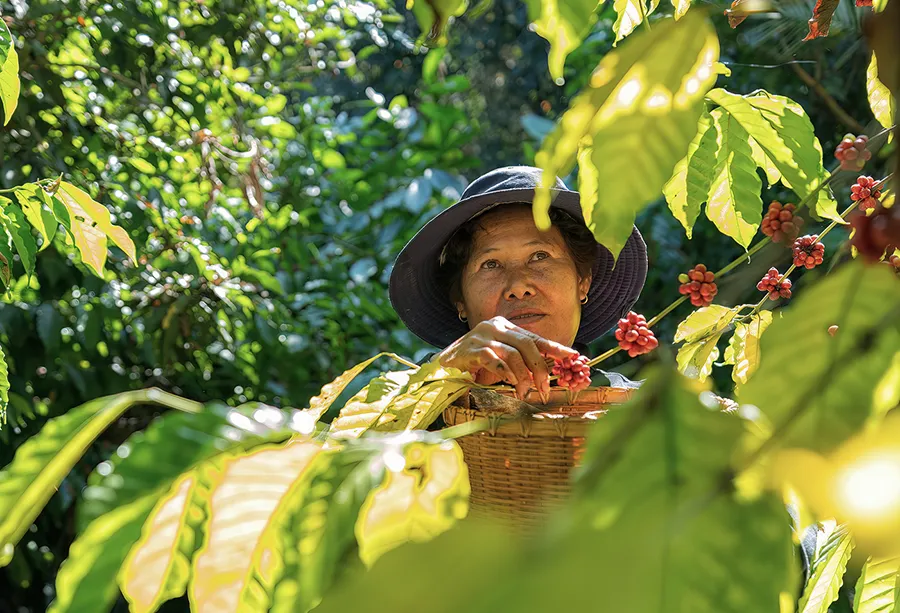
Our Origins
We provide direct access to origin, working with producers around the world to select coffees that carry identity, history, and exceptional quality.
Our long-standing relationships in producing countries allow us to offer traceable, responsible, and unique coffees — cultivated with care and shared with a clear purpose.
Coffee Encyclopedia
The Coffee Encyclopedia is a tool designed to promote a coffee culture rooted in quality, transparency, and knowledge. A valuable reference point for roasters, professionals, and coffee enthusiasts across the entire supply chain.
- Countries of Origin
Guatemala
- Altitude Range
750–2,000 m (2,500–6,600 ft), with local classifications like “Strictly Hard Bean (SHB)” for altitudes above 1,300 m.
- Harvest Season
December–March in most regions, with some regions harvesting until April.
- Flavor Profile
A wide variety of profiles, from light and fruity to rich, sweet, complex, and chocolatey.
- Varieties
Bourbon, Caturra, Catuaí, Typica, Maragogype, Pache.
- Process
Primarily washed; many producers have their own mills and prefer traditional sun-drying.
- Identity and Traceability
Guatemala is a pioneer in regional marketing with protected designations of origin and offers one of the greatest aromatic diversity and richness of iconic territories in the coffee world.
- Countries of Origin
Honduras
- Altitude Range
1,000–1,600 m (3,300–5,200 ft), with SHG classifications above 1,200 m and HG above 1,000 m.
- Harvest Season
November–March or December–April depending on the region.
- Flavor Profile
A wide range, but the best coffees show vibrancy, bright acidity, and a sweet, fruity complexity.
- Varieties
Bourbon, Caturra, Catuaí, Typica, Pacas.
- Process
Mostly washed, with both sun and mechanical drying due to rainfall, and traceability to the producer group or a single farm (finca).
- Recent Growth in Excellence
Honduras is now the top coffee producer in Central America and has rapidly established itself due to improvements in quality, active cooperatives, and regional diversity that offers very lively profiles.
- Countries of Origin
Costa Rica
- Altitude Range
500–1,900 m (1,600–6,200 ft), depending on the region.
- Harvest Season
Primarily November–March, but with variations (some areas harvest from July to February).
- Flavor Profile
Light-bodied, very clean and sweet coffees; a great recent variety thanks to micro-mills, from bright cups to complex aromas.
- Varieties
Primarily Caturra and Catuai, with Villa Sarchi in some districts.
- Process
Mostly washed (wet process), with widespread adoption of micro-mills and traceability to the farm or cooperative.
- Identity and Traceability
Costa Rica is a pioneer in traceability and sustainability, thanks in part to a high number of small, independent producers and the promotion of coffee tourism/ecotourism.
- Countries of Origin
El Salvador
- Altitude Range
500–2,300 m (1,600–7,500 ft), classified as “Strictly High Grown (SHG)” above 1,200 m, “High Grown (HG)” above 900 m, and “Central Standard” above 600 m.
- Harvest Season
October–March or October–February, depending on the region.
- Flavor Profile
Sweet, well-balanced Bourbon coffees with soft acidity, and often excellent complexity and sweetness.
- Varieties
A high presence of Bourbon (up to 68%), Pacas, Pacamara, and other old varieties.
- Process
Predominantly washed, with easy traceability to the farm and micro-lots for process and variety.
- Genetic Richness
El Salvador preserves one of the highest percentages of original Bourbon varieties and has mineral-rich volcanic soils, which allows it to produce unique coffees that are highly awarded in international competitions.
- Countries of Origin
Nicaragua
- Altitude Range
1,000–1,700 m (3,300–5,600 ft), depending on the region.
- Harvest Season
December–March (some areas until February).
- Flavor Profile
A wide and complex range; often a fruity profile with lively acidity and floral or sweet notes.
- Varieties
Bourbon, Caturra, and often Maragogype.
- Process
Mostly washed, with traceability to the farm (finca), group, or cooperative; many companies still use sun-drying.
- Continuous Quality Evolution
After periods of crisis and instability, Nicaraguan production has been revitalized with active cooperatives and a growing reputation for high aromatic quality and the ability to produce coffees that win awards in international competitions.
- Countries of Origin
Colombia
- Altitude Range
900–2,300 m (3,000–7,500 ft) depending on the region.
- Harvest Season
March–June and September–December (some regions have two main harvests: raccolto principal and mitaca).
- Flavor Profile
A great aromatic variety, from full-bodied coffees with chocolate notes to sweet, fruity, and lively profiles; a wide range among regions.
- Varieties
Typica, Caturra, Castillo (percentages vary depending on the region).
- Process
Primarily washed, with a strong emphasis on traceability and quality, and numerous cooperatives and small producers.
- Innovation and Strong Identity
Colombia is distinguished by a significant social infrastructure around coffee, with strong international marketing (e.g., Juan Valdez), and a cooperative system that has improved the quality of life in rural regions and the global reputation of Colombian coffee.
- Countries of Origin
Bolivia
- Altitude Range
155–2,300 m (500–7,600 ft).
- Harvest Season
July–November.
- Flavor Profile
Very clean and sweet, rarely fruity.
- Varieties
Old varieties like Typica and Caturra.
- Process
Often washed, with some washing stations built to improve quality.
- Ideal Growing Conditions
The combination of high altitude, a defined climate, and traditional varieties allows for the production of excellent quality coffees with unique profiles, internationally recognized for their cleanliness and sweetness.
- Countries of Origin
Peru
- Altitude Range
900–2,050 m (3,000–6,750 ft) depending on the region.
- Harvest Season
March–September.
- Flavor Profile
Generally clean, sweet, medium-bodied coffees with a tendency toward soft flavors; in recent years, there has been an increase in distinctive and juicy coffees.
- Varieties
Bourbon, Typica, Caturra, Pache, Mondo Novo, Catuaí, Catimor.
- Process
Mostly washed; a high incidence of small producers and cooperatives, with frequent traceability to the group and sometimes to the farm (finca).
- Strong Growth in Sustainability
Peru is distinguished today by the high percentage of Fair Trade and organic production and by the role of cooperatives in the social development of rural areas.
- Countries of Origin
Brazil
- Altitude Range
550–1,350 m (1,800–4,400 ft), varying by region.
- Harvest Season
May–September (can start in June in some areas).
- Flavor Profile
Full-bodied, low acidity, pronounced sweetness, with notes of chocolate and dried fruit.
- Varieties
Mundo Novo, Yellow Bourbon, Caturra, Catuaí.
- Process
Natural, pulped natural; large-scale production with mechanized techniques
- Global Leader
Brazil has been the world’s leading coffee producer for over 150 years, historically and currently contributing about one-third of global production.
- Countries of Origin
Mexico
- Altitude Range
800–1,750 m (2,600–5,750 ft), depending on the region.
- Harvest Season
November–March.
- Flavor Profile
Coffees ranging from delicate and full-bodied to sweet, caramel, or with notes of toffee and chocolate, depending on the region.
- Varieties
Bourbon, Typica, Caturra, Maragogype.
- Process
Mostly washed, predominantly from small producers; traceability is frequent to the group or cooperative lot, and sometimes to the farm (finca).
- Social and Ethical Diversity
Mexico has one of the highest percentages of small producers and ethical cooperatives, with increasing attention to Fair Trade and organic certifications in recent decades.
- Countries of Origin
India
- Altitude Range
400–2,000 m (1,300–6,600 ft), but typically between 900–1,600 m in many key regions.
- Harvest Season
October–February.
- Flavor Profile
Full-bodied, creamy, and heavy coffees with low acidity; rarely complex, but Robustas are appreciated for cleanliness and Arabicas for a classic balance.
- Varieties
S795, Selection 9, Cauvery, Selection 5B and 6, Robusta S274, Kent; a wide presence of both Arabica and Robusta.
- Process
Washed for Arabica (“Plantation Coffee”), natural for Robusta (“Parchment Coffee”); production is very fragmented among small producers, making it difficult to trace to a single one, with regions having historical designations.
- Innovation and Biodiversity
India is distinguished by the development of resistant varieties (e.g., Selection 795, Cauvery), the double cultivation of Arabica and Robusta, and the unique production of Monsooned Malabar, which gives it an inimitable aromatic character.
- Countries of Origin
Indonesia
- Altitude Range
600–1,800 m (2,000–5,900 ft), varying among islands and regions (Sumatra, Sulawesi, Java, Bali, Flores).
- Harvest Season
Varies by region; Sumatra and Java September–December/July–September, Sulawesi and Flores May–November, Bali May–October.
- Flavor Profile
Semi-washed (giling basah), with a full-bodied, spicy, earthy, and woody profile, very low acidity, and a persistent aftertaste; some brighter exceptions from smaller islands.
- Varieties
A wide Typica base (including Djember, USDA, Ateng, TimTim), S795, local hybrids, Robusta.
- Process
Predominantly semi-washed (giling basah), with growing interest in washed; small farms and cooperatives, difficult to trace to a single producer except on large estates.
- Regional Wealth and Processes
Indonesia offers the widest diversity of traditional processes and island terroirs in the world, with icons like Kopi Luwak and Mandheling varieties, and unique botanical varieties developed on the islands.
- Countries of Origin
Vietnam
- Altitude Range
200–1,600 m (650–5,200 ft), with the vast majority of production between 600–1,000 m in the Highlands.
- Harvest Season
November–March.
- Flavor Profile
The vast majority of coffees have woody, herbaceous, flat, and not very sweet profiles; high-quality lots are rare.
- Varieties
Primarily Robusta, with the presence of Bourbon and local hybrids in Arabica areas (Son La, Da Lat, Quang Tri, Lam Dong).
- Process
Predominantly natural/dry and only a small part is washed; production is dominated by large private companies and cooperatives, with complex and often absent traceability.
- Global Production Power
Vietnam is the world’s second-largest producer and is at the center of technical modernization and efficiency in the Robusta sector; the specialty Arabica sector is now also growing in some micro-regions.
- Countries of Origin
Rwanda
- Altitude Range
1,300–2,200 m (4,300–7,200 ft), depending on the region.
- Harvest Season
March–June.
- Flavor Profile
Coffees with freshness and fruitiness, often notes of red apple, grape, and sometimes floral, with great cleanliness and vibrancy in the cup.
- Varieties
Bourbon, Mibirizi (historical local varieties).
- Process
Mostly washed; traceability typically extends to the washing station or producer group, not the single farm.
- Rebirth and Quality
Rwanda is a symbol of post-crisis rebirth thanks to investments in training, washing stations, and transparency; the country hosts the Cup of Excellence and produces some of the best Bourbons in Africa.
- Countries of Origin
Tanzania
- Altitude Range
1,050–2,500 m (3,500–8,100 ft) depending on the region.
- Harvest Season
Primarily July–December (some areas June–October).
- Flavor Profile
Complex coffees with great acidity and vibrancy, with fruity notes and often hints of berries and citrus; they can be very juicy and interesting.
- Varieties
Kent, Bourbon, Typica, Nyara (some Bourbon derivatives like N5 and N39), and in some areas, Robusta.
- Process
Mostly washed; about 90% is produced by small farmers who deliver to cooperatives or washing stations, but the best often come from large estates.
- Two Aromatic Souls
Thanks to the geographical separation between high-altitude Arabica and Robusta in the northwest, Tanzania offers one of the greatest aromatic diversities in Africa, ranging from bright acidity to full body, with renewed interest in specialty productions.
- Countries of Origin
Ethyopia
- Altitude Range
1,400–2,200 m (4,600–7,200 ft) based on the main regions.
- Harvest Season
October–February or October–January depending on the area.
- Flavor Profile
Immense diversity; from floral, citrus, and tea-like (Yirgacheffe, Sidama) to intense, winey, and spicy aromas (Harrar); the best are elegant, clean, complex, and often extraordinarily fruity.
- Varieties
Primarily native heirloom varieties (old indigenous varieties), often unclassified.
- Process
Both washed and natural; unique systems of forest, garden, and plantation cultivation, with a historical presence of small producers and unique genetic biodiversity.
- Origin of Arabica Coffee
No other country offers the same combination of biodiversity, terroir, and history: Ethiopia is considered the world’s cradle of coffee, with an unparalleled aromatic, botanical, and traditional variety.
- Countries of Origin
Kenya
- Altitude Range
1,200–2,300 m (3,900–7,500 ft) depending on the region.
- Harvest Season
October–December (main harvest), June–August (fly crop, intermediate harvest).
- Flavor Profile
Bright, complex coffees with fruity (berry-like) flavors, intense sweetness, and balanced acidity.
- Varieties
SL-28, SL-34, Ruiru 11, Batian, and Blue Mountain in small areas.
- Process
Mostly washed; cultivation on both large farms and by small producers who deliver to washing stations, with an excellent traceability and grading system by size/quality (AA, AB, PB, etc.).
- Excellence Auction System
Kenya is recognized for its auction and agronomic research system, which, by rewarding quality, has allowed for the development of unique varieties and a worldwide reputation among the best specialty coffees.
- Countries of Origin
Uganda
- Altitude Range
1,200–2,300 m (3,900–7,550 ft) depending on the region.
- Harvest Season
October–March (main harvest), May–July/February–March (secondary harvest/fly crop, depending on the area).
- Flavor Profile
Exceptional coffees are still rare, but the best cups offer hints of dark fruit and great cleanliness.
- Varieties
Kent, Typica, SL-14, SL-28; predominance of native Robusta in the lowlands and Arabica at high altitudes.
- Process
Mostly washed in Arabica areas (Bugisu, West Nile, Western Uganda); almost all Robusta is natural. Production is traceable to cooperatives/producers; the terms “Wugar” (washed Arabica) and “Drugar” (natural Arabica) are used.
- Unique Diversity and Specialty Growth
Uganda is one of the few countries with native Robusta coffee and rapid evolutions in specialty origins—cooperatives and producers are building a new reputation for increasingly high quality, including high-altitude Arabica.
- Countries of Origin
Papua New Guinea
- Altitude Range
400–1,900 m (1,300–6,200 ft) depending on the region.
- Harvest Season
April–September.
- Flavor Profile
Coffees are often buttery, sweet, with great complexity and a harmonious body.
- Varieties
Bourbon, Typica, Arusha (a descendant of Blue Mountain).
- Process
Mostly washed; about 95% of producers are small farmers, with growing attention to traceability from single cooperatives or estates, especially in the Highlands.
- Biodiversity and Potential
Papua New Guinea offers ideal altitude, microclimates, and volcanic soils; today, it is attracting great interest for specialty coffee due to balanced cups and distinctive aromatic profiles compared to Indonesia or other origins.